
Related Articles
- Navigating the Talent Labyrinth: How Emotional Intelligence Is Shaping New Hiring Practices in Unseen Markets
- Behind the Scenes: How Automating HR Processes Is Redefining the Future of Recruitment and Job-Seeking Strategies
- Beneath the Surface: Unveiling the Surprising Role of Environmental Sustainability in Shaping Future Careers
- Exploring the Quirky Side of Remote Work: How Hobbies Are Fueling Professional Success in Unexpected Ways
- How the Remote Revolution is Inspiring Unlikely Friendships Across Continents: A Study of Global Connectedness
- The Unforeseen Bond: How Virtual Coworking Spaces Foster Unexpected Connections Amidst Remote Work
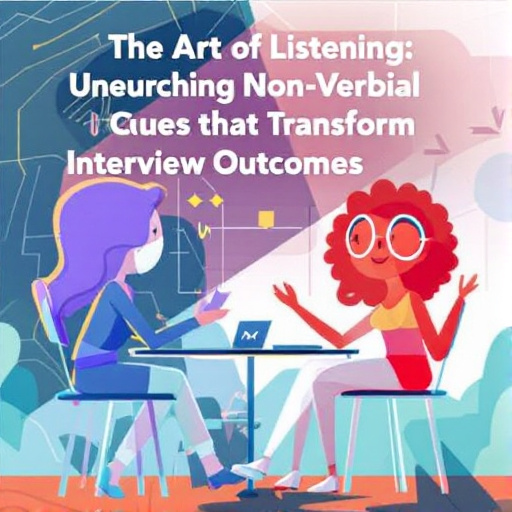
The Art of Listening: Unearthing Non-Verbal Cues that Transform Interview Outcomes
The Art of Listening: Unearthing Non-Verbal Cues that Transform Interview Outcomes
The Art of Listening is a powerful tool that can dramatically influence the outcomes of interviews by unearthing non-verbal cues that often speak louder than words. By understanding these cues, both interviewers and candidates can enhance their communication effectiveness and build better connections.
Understanding the Basics
At its core, listening is a multifaceted art. According to research presented in the International Journal of Listening, effective listening can improve interpersonal relationships significantly, with 85% of people citing listening as the most important communication skill.
Non-Verbal Cues: The Silent Language
Imagine walking into an interview room where both parties exchange mechanical pleasantries. But beneath the surface, how often do we pay attention to body language? Non-verbal communication can convey more information than spoken words. Studies show that up to 93% of communication effectiveness is determined by non-verbal cues, including facial expressions, posture, and even the distance one maintains during the conversation (Mehrabian, 1971).
Facial Expressions Speak Volumes
A smile can be your best friend in an interview, while a furrowed brow might raise red flags. Non-verbal cues like eye contact can indicate confidence or nervousness; a candidate who maintains eye contact typically projects assurance, while someone who avoids it might appear uncertain or disinterested.
Story Time: The Job that Almost Wasn’t
Let’s take a moment to look at Sarah, a recent graduate who had her heart set on working for a top tech company. On the day of her interview, she felt nervous yet confident. However, instead of just listening to the interviewer's words, she tuned in to the subtle signals he sent. Despite his polished dialogue, she noticed he constantly looked away when discussing company values. This non-verbal cue led her to realize that the company culture might not align with her ideals; she decided to turn down the offer. Listening can help in evaluating and not just accepting.
Key Questions to Ask Yourself
When it comes to listening, self-awareness is essential. Are you genuinely engaged in what the interviewer is saying? Are you reading their body language while they speak? Taking the time to reflect on these questions can make a substantial difference in how interviews proceed.
Active Listening Techniques
So, how can we employ active listening techniques in an interview? Here are a few you might find beneficial:
- Clarifying Questions: Asking specific questions shows you are processing the information. For example, saying “Could you elaborate on that point?” expresses engagement.
- Reflective Listening: Paraphrase what the interviewer says to demonstrate understanding. Try saying, “It sounds like you’re looking for someone who can...”
- Summarization: Periodically summarize parts of the conversation to reinforce comprehension.
Humor in Interviews: A Double-Edged Sword
Let’s add a dash of humor: Have you ever tried to use a joke during an interview? Circle back to that moment, where you attempted a witty quip about the weather and your interviewer merely blinked. Understanding your audience's non-verbal feedback can mean the difference between a new job and a new awkward story. So, choose your humor wisely!
The Power of Pauses
In an era dominated by rapid-fire dialogue, the power of pauses should not be overlooked. Use silences strategically. Research suggests that a well-placed silence gives both parties time to reflect, particularly in high-stakes conversation. It also gives you time to process non-verbal cues; seeking a moment to breathe can legitimately change your emotional state and ensure you respond thoughtfully.
Statistics Tell the Story
Consider this: According to a survey by CareerBuilder, 70% of employers have rejected candidates based on poor non-verbal communication. This statistic speaks volumes - how one presents themselves can make or break an opportunity, highlighting the need for refined listening skills that encompass both verbal and non-verbal indicators.
Case Study: The Successful Job Interview
Let’s dive into a contrasting case study: Mark, a candidate known for his stellar listening abilities. During his interview, he navigated the conversation with confidence. When the interviewer expressed concerns about teamwork, Mark could sense their underlying worry. He calmly addressed the question with an example that showcased his collaborative nature, ultimately securing the position. Listening not only helped Mark shine but also set up a rapport with the interviewer.
Creating a Connection
Creating a connection is equally vital. Active listening involves not just hearing words but forging a connection through shared understanding. A study published by the Journal of Applied Psychology highlighted that interviewees who displayed empathy during their interactions were viewed more favorably by interviewers. So how do you create this connection? Listen attentively and mirror some non-verbal cues.
Breaking the Barriers of Culture
In our globalized era, cultural nuances can impact communication profoundly. An American might see a firm handshake as a sign of strength, while in some cultures, less physicality is preferred. Understanding these subtleties means listening—both verbally and non-verbally—across cultural boundaries. For instance, a nod in some cultures signifies understanding, while in others, it could show respect.
Preparation: The Hidden Advantage
Preparation can bolster your ability to listen effectively. Before the interview, research the company culture through online reviews and forums. This familiarity will enable you to decipher non-verbal signals more accurately. When interviewing at a startup known for its casual atmosphere, for instance, you might notice that an interviewer leaning back in their chair projects openness and friendliness.
The Ripple Effect
Listening extends beyond personal gain. When you listen well, you inspire others to do the same, creating a ripple effect in the workplace. A study by the Harvard Business Review demonstrated that organizations that practice active listening are 2.5 times more likely to foster employee engagement. This means by mastering the art of listening, you’re not only improving your interview techniques but also enriching workplace dynamics.
Conclusion: Skill Building for Future Interviews
To summarize, mastering the art of listening extends beyond verbal dialogue—it's about capturing the essence of communication through non-verbal cues. As we navigate interviews in our respective fields, paying attention to these cues helps shape our success. The secret to unlocking better outcomes in interviews lies within us: it’s about embracing the power of listening, both seen and unseen, spoken and unspoken.
In an age where communication is becoming increasingly fragmented, let us invest in enhancing our listening skills. Understanding signals won’t just transform interview outcomes; it creates a foundation for lasting interpersonal relationships, a cornerstone for success in both personal and professional life.
Read More